

Choice - That's The Real Power
Rayotta Jan 18, 2026
Title is borrowed from the book All Wounds, chapter 21, a song of time, part 2 , by Destiny-Smasher.
When talking about choices, we see that most choices in LiS
lead to something unsatisfying, that Max is still powerless even with
the power. While this seems to be the case, the meaning
of rewind is also presented in the game. "I'd rather have
a life of 'oh well's than a life of 'what if's."
Imprisoned in the cellroom of collectivity, tied up in the shackles
of sociality, forced to bend her will to surrounding people, dreaming
to have a strong and independent personality, but surrendering to others
everyday in real life, Max is effectively a prisoner behind a
locked door, and Chloe is the key. (Thank you, Glass Walls.)
"Birds are so lucky. They can always escape." Seeing a bird
flew away on that cliff path, Max let out a slight
sigh.
Admittedly, there could be other keys out there. But at the
same time, I should not neglect the possibility that as time
goes on, the door becomes thicker and thicker, as Max wants
more and more distance from outside, or the lock becomes tighter
or higher-teched, to better protect the prisoner from being harmed, or
the door becomes completely sealed by long-time motionless or damaged hinges.
Hard to say what the people-pleaser kinda personality of Max would
do to herself in the coming years. Bet one's happiness on
future possibilities, is always a dangerous thing to do.
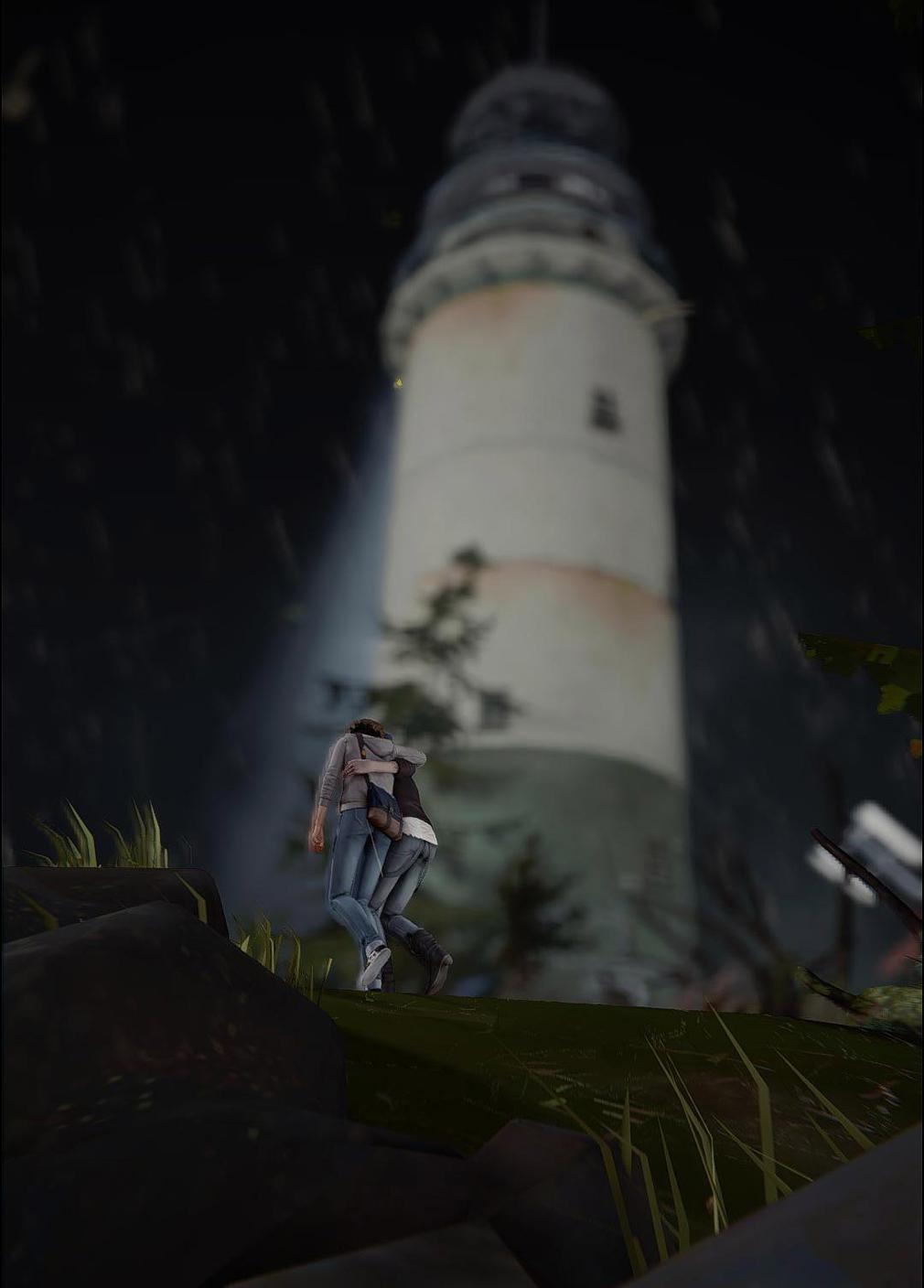
Chloe is a lighthouse of Max's pursuit of personal happiness, which
is always the ultimate goal of life (whether that life subjectively
approves it), and should also be my "first priority". At that
point before the final decision, Max effectively gave me a golden
line. Whether it's out of knowledge or just an instinctive impulse,
its value is undeniable.
(If it's because of knowledge, I can therefore deduce that she
has the knowledge needed in that situation and chooses to stick
to it; if it's instinctive, at least I know she still
instinctively yearn to be freed.)
The game uses four days of story to show us how
Max likes to hide away from the heat when there's a
possible confrontation, and how Chloe is a "good bad influence" on
her, so she can say what she never dared to say,
act like someone who knows what pleases herself the most. Then,
when it comes to the fifth day, the game finally gives
us the answer, tearing off the last layer of veil. In
that nightmare where everything is driven by subconscious, I get to
see what's buried deep down in Max's heart, beneath layers of
disguise, that everyone in her life, whether annoying or fearsome, or
friendly or respected, is out to catch her, to keep slaving
her in the cellroom, to prevent her from making the honest
decision. Although Chloe is the one who said "everybody pretends to
care until they don't", now I see Max is the one
who really thinks that way. Even the other self, the wanna-be
superego full of artificial moral codes, scoffed at Max's attempt to
find freedom. Falling into this plight, Max was pushed onto the
verge of losing herself.
Fortunately, even in the nightmare, there's still the one who stands
behind. When Max was about to lose consistency with her own
existence, Chloe still rushed to Max's side and told Max to
be true to herself, that "this is reality." A brilliant trick
to show that subconsciously Max puts trust in Chloe even more
than in herself. During that week, it's Chloe who made Max
a hero out of that "shy cliché geek". A simple sentence
from Chloe weighs more than barrages of opposition and ridicule, rids
Max of doubts and hesitations. From that moment on, the tone
of the nightmare changed. On that road of memories, one after
another static moments came along, together with the quiet narration of
the stories behind, and the happiness or bitterness conveyed by. Master
level story-telling by DONTNOD, to show that Max values her lifetime
happiness way more than short-term moral satisfaction.
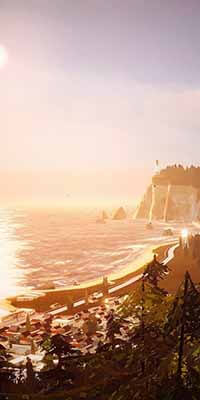
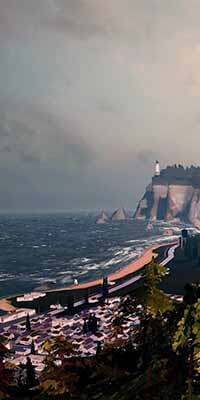
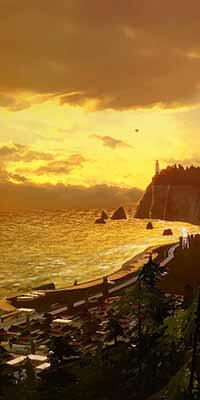
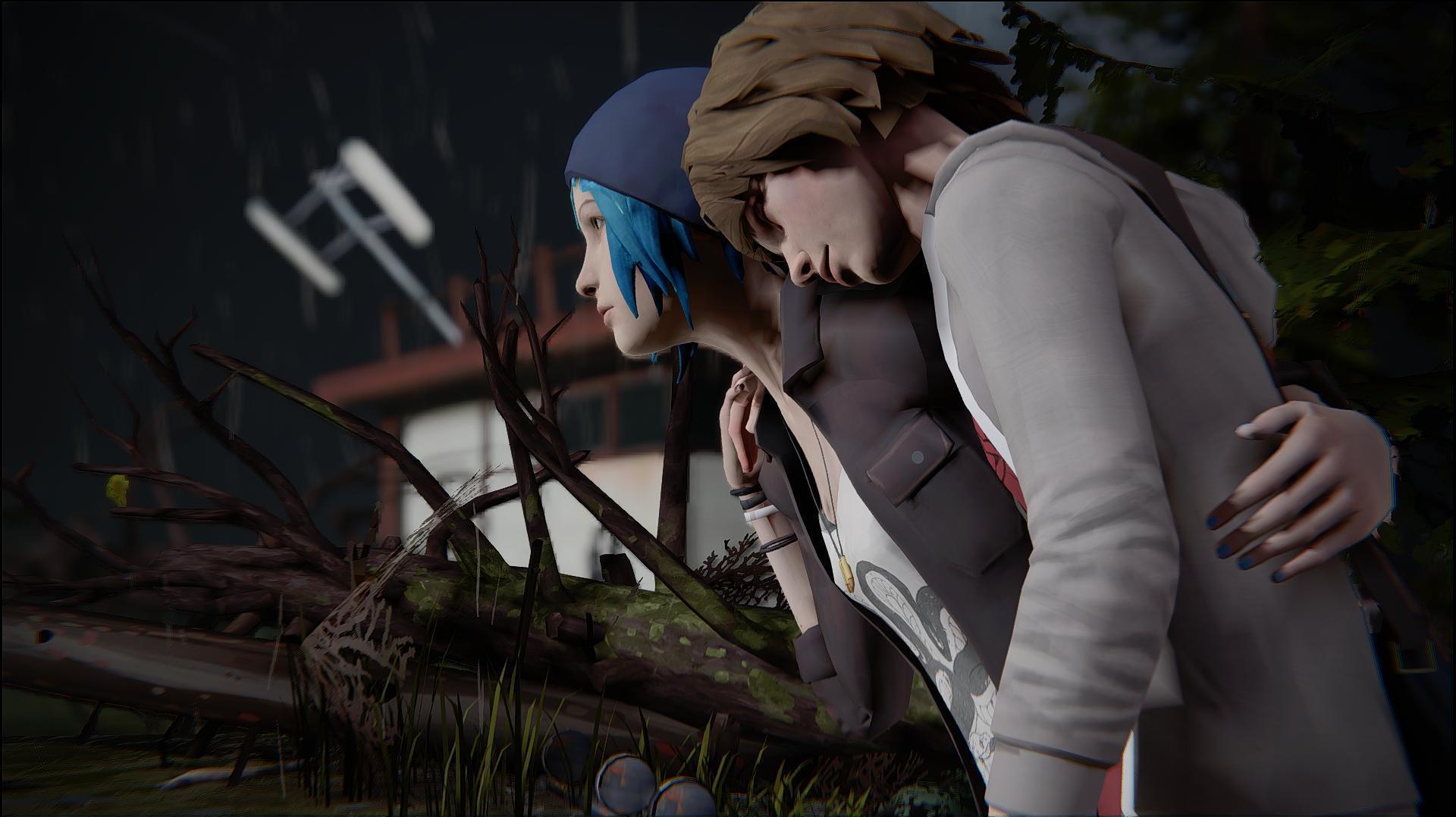
Then the last image came. There's the silhouette of Chloe carrying
Max on her shoulders, climbing on the stairs, to the lighthouse
in the pouring rain. Back on Monday in class, the very
beginning of the story, in the dream Max saw the lighthouse
on cliff and said to herself, "I'll be safe if I
can make it there." Until the very end, I got to
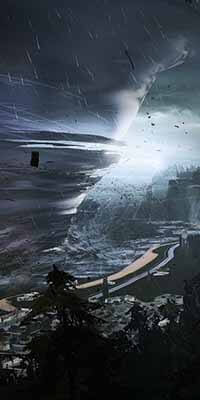
see the true meaning of this sentence. In that dream, the
lighthouse was destroyed, hit by a boat blown by wind. The
light that illuminates Max's path to happiness is no more. Lighthouse
is solitary, but it brightens the path to destination; cellroom is
protected, but it leads to only suffocation. Max was granted a
week to make a change, to find the key to unlock
the door of her cellroom, most importantly, to keep by side
the one who can and will carry her to her happiness.
Similar argument comes from Jean-Paul Sartre, "L'enfer, c'est les autres." If
Max started to define herself as how others perceive and judge
her, treat herself like an object or a tool of the
society, she would be beyond help. On contrary, when she sees
through the ethical snare for what it is, that tries to
force or lure her into giving up her lifetime happiness for
a socially sanctioned medal of virtue, and endless suffocation and emptiness,
she becomes rational enough for herself, to take responsibility for her
own life instead of running away from it in the excuse
of a pseudo-concept "community interests", to see the fact that nobody
is a tool for any community, but the guardian of her
own happiness, even if the said community requires otherwise. So when
facing the the tornado, the ultimate collectivity moral trap, she can
give an honest answer.
Such is written by Bertrand Russell in History of Western Philosophy,
about prudence. The following paragraph is directly copied from the book.
If you've already read this, just skip it, and the question
of final choice shouldn't be troublesome to you.
The civilized man is distinguished from the savage mainly by prudence,
or, to use a slightly wider term, forethought. He is willing
to endure present pains for the sake of future pleasures, even
if the future pleasures are rather distant. This habit began to
be important with the rise of agriculture; no animal and no
savage would work in the spring in order to have food
next winter, except for a few purely instinctive forms of action,
such as bees making honey or squirrels burying nuts. In these
cases, there is no forethought; there is a direct impulse to
an act which, to the human spectator, is obviously going to
prove useful later on. True forethought only arises when a man
does something towards which no impulse urges him, because his reason
tells him that he will profit by it at some future
date.
I've been arguing with myself the reasons of choosing Chloe, and
Russell presents me the top one. It's because Max will ultimately
benefit from it more than the other choice in the coming
lifetime. Back in ep. 4, Max murmured a sentence about "navigate
the present". While I doubt she really knew what it meant
back then, there's no doubt that only by learning and practicing
it to the full extent can she achieve that goal. She
needs to make the wise choice, so future Max will appreciate
today.
That, to me, is the final challenge of LiS. Am I
rational enough to see through the cheap collectivity moral code? Am
I wise enough to tear off the emotional, short-sighted moral satisfaction?
If Max can change herself, through the power of choice, from
a crying baby losing herself in swirl of opinions and statements,
to a guardian for herself who understands reality and finds the
best solution for the rest of her life, can I do
the same?
Can I foresee obstacles through the blizzard?

0 people liked this.



- @Rayotta Author